
Curriculum

Learning and Teaching
Rationale and Vision
At St Kilda Primary School we provide exemplary educational opportunities in a stimulating, safe, nurturing environment to instil a love of learning, celebrating effort and achievement in the belief that all students can thrive and lead productive and fulfilling lives.
‘We know our world is changing rapidly. We see change in contemporary communications and transportation, in new ways we access and create information, and in emerging enterprises that place consistent emphasis on new capabilities like critical and creative thinking and problem solving. We also know climate change, new technologies, and a new geopolitical landscape, make our future hard to predict and open to great possibility. Navigating such rapid change requires resilience, adaptability and perseverance.’ (Amplify, 2018, p.7)
Student voice and agency begins with children being able to make valued and respected contributions to their learning and their school life. By focusing on the 6 deep learning competencies (Character, Communication, Collaboration, Citizenship, Creativity and Critical Thinking) we empower our children to be able to express their thoughts and ideas, understand how they can act to make change and become proactive global citizens of the future. Not all children will be identified as leaders in their future, but all children will be leaders of their life with the values and skills that will help us create a better world.
Our vision, ‘Live for today, learn for tomorrow, be the future’, is at the core of all educational decision making.
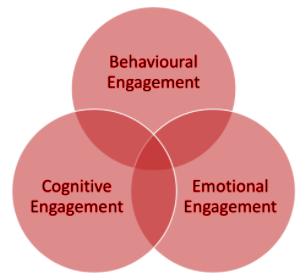
Teaching and learning programs reflect the holistic needs of students, recognising and catering for different learning styles and celebrating student achievement. We believe that engagement on all levels, emotional, cognitive and behavioural, is required to ensure maximum participation, a sense of connectedness and a personal investment into learning.
Instructional Model
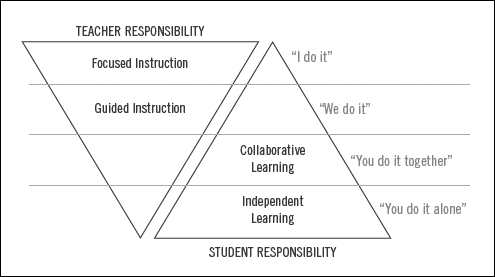
St Kilda Primary School’s instructional model is designed to allow for consistent and collaborative instruction across all year levels. Our instructional model is primarily based on the Gradual Release of Responsibility. The Gradual Release Model is a best practice instructional model where teachers strategically transfer the responsibility in the learning process from the teacher to the students (Fisher & Frey, 2013).
Practice Principles
The DET practice principles closely align with our school’s values, vision and mission. They provide the framework for us to discuss problems of practice and to innovate the teaching and learning opportunities here at St Kilda Primary School.
Our practice is encompassed by three core principles:
- Positive climate for learning
- Excellence in teaching and learning
- Community engagement in learning
At St Kilda Primary School, all teachers:
- Have high expectations of their students
- Build strong relationships and promote inclusion and collaboration
- Consider student voice, agency and leadership when designing learning experiences
- Place the student at the centre and assess their skills and knowledge to ensure focused, targeted learning and teaching
- Understand the importance of moving from surface to deep learning to embed skills and knowledge
- Use the Collaborative Inquiry Cycle to review the learning experiences and improve practice
- Support our students to develop the skills to be active global citizens and understand how they can enact change in their world
- Make strong connections with parents and see them as true partners in supporting the learning journey of our students
Pedagogical Model
At St Kilda Primary School, our pedagogical model empowers our students to:
Engage
- build independence and believe in themselves and their ideas
- respect and value the thoughts and opinions of others
- be resilient, adaptable and persevere when faced with new experiences
- flex their learning muscles by developing habits and attitudes that enable them to face difficulty and uncertainty, calmly, confidently and creatively
- be driven by curiosity where ‘learners are infiltrators and shapers of the future’
- take ownership of their learning and develop a disposition towards ongoing learning
Explore
- be active participants in their own learning by exploring and understanding themselves as learners
- be open to different ways of thinking and doing
- experiment, discover and create strong ideas, thoughts and ethics
- collaborate with their peers, experts and leaders industries
Explain
- have a voice, ask questions and respectfully challenge ideas and opinions
- build skills, knowledge, self-confidence and self-efficacy through inquiry
Evaluate
- engage in deep learning experiences that are relevant, authentic and build their competencies (6Cs) using real life problem solving
- be critical and creative thinkers that enable them to pose problems and find solutions to new ambiguities, not just finding an answer to a problem that has already been answered
Elaborate
- become proactive global citizens by being leaders in their class/school/community
- set goals, monitor progress and celebrate achievements
- develop a mindset that will help them thrive in all aspects of their lives
“Nothing worth learning can be taught.” – Oscar Wilde
References
Boaler (2016) Mathematical Mindsets
Boushey and Moser (2014) The Daily 5
Claxton (2018) The Learning Power Approach
Claxton, Chambers, Powell and Lucas (2011) The Learning Powered School
Cullham (2005) 6+1 Traits of Writing
DET (2018) Amplify
DET (2017) High Impact Teaching Strategies
DET (2018) Practice Principles for Excellence in Teaching and Learning
DET (2018) The Pedagogical Model
DuFour and Eaker (1998) Professional Learning Communities at Work
Fisher and Frey (2013) Gradual Release of Responsibility Instructional Framework
Fountas and Pinnell (2001) Guiding Readers and Writers (Grades 3-6): Teaching, Comprehension, Genre and Content Literacy
Fountas and Pinnell (2017) Literacy Continuum
Fullan and Quinn (2016) Coherence
Fullan, Quinn and McEachen (2017) Deep Learning: Engage the World Change the World
Hattie (2012) Visible Learning for Teachers
Hattie, Fisher and Frey (2016) Visible Learning for Literacy
Knight (2013) High Impact Instruction
Middleton and Jansen (2011) Motivation Matters and Interest Counts: Fostering Engagement in Mathematics
Murdoch (2015) The Power of Inquiry
Quinn, McEachan, Fullan, Gardner and Drummy (2019) Dive into Deep Learning
Reyes, et al (2012) Helping Children Learn. Mathematics
Ritchhart, Church and Morrision (2011) Making Thinking Visible
Thomlinson and McTighe (2006) Integrating Differentiated Instruction and Understanding by Design
Serravallo (2015) The Reading Strategies Book
Serravallo (2017) The Writing Strategies Book
Siemon, et al (2011) Teaching Mathematics Foundations to Middle Years
Sullivan (2018) Challenging Mathematical Tasks
Wiggins and McTighe (2011) The Understanding by Design Guide to Creating High Quality Units
Van de Walle, et al (2014) Teaching Student-Centred Mathematics
Walker (2007) Play Matters